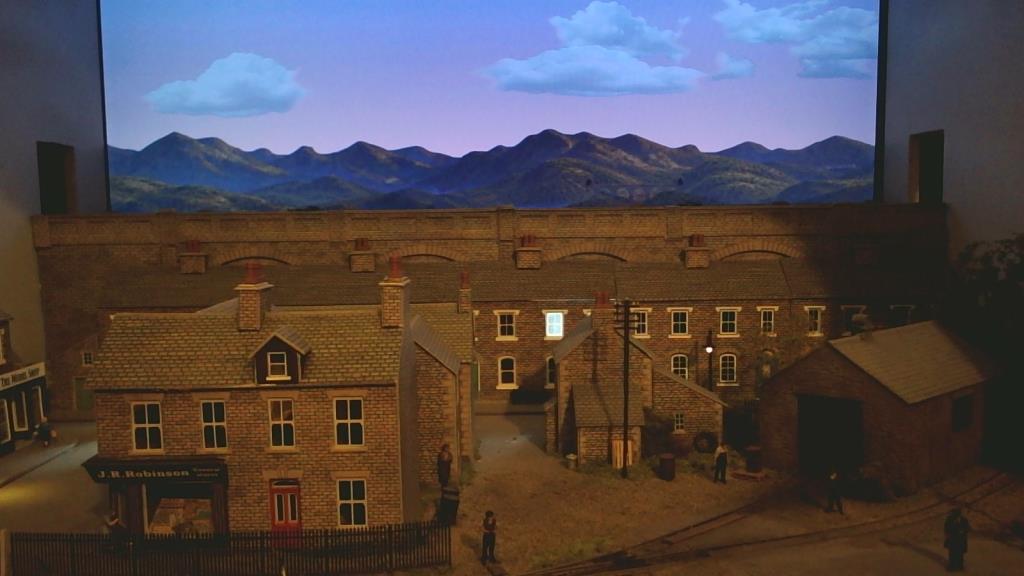
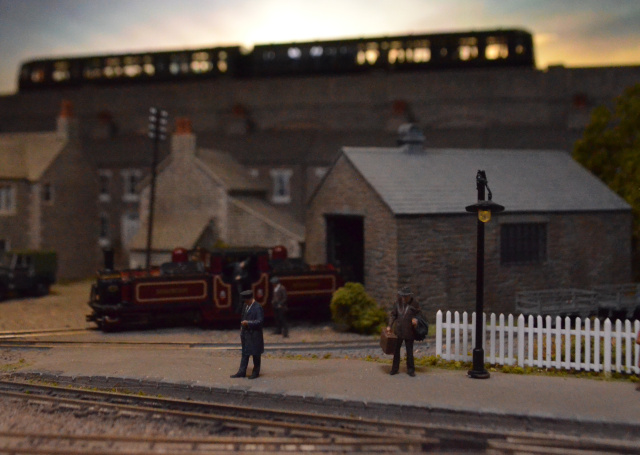
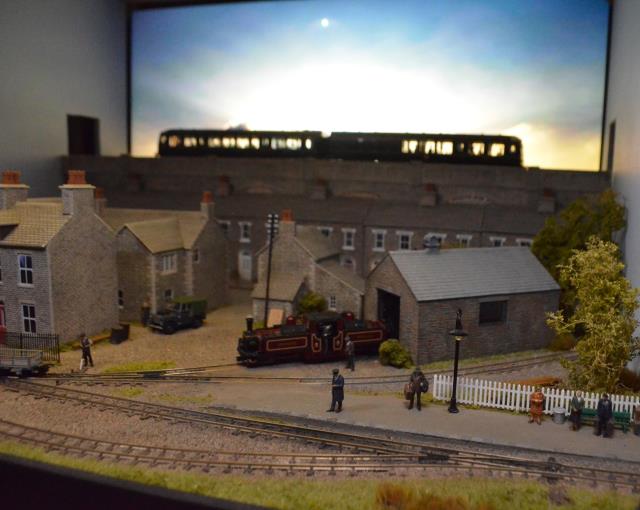
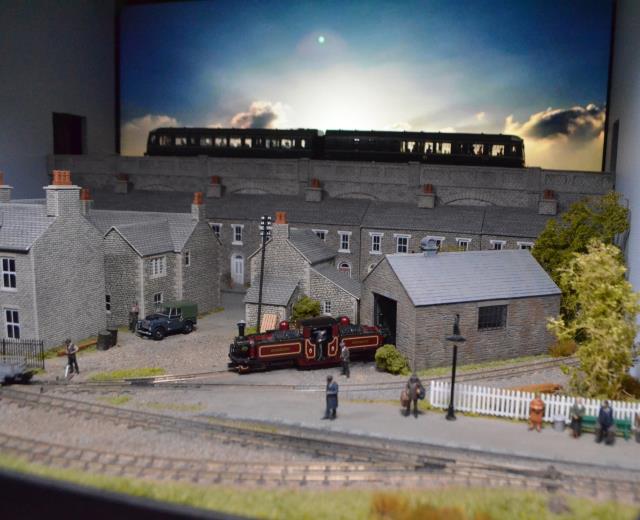
The full-width screen has always been at the heart of Bond Lane. It is the feature that turns the layout from a static scene into a small world in which time passes, weather changes and the atmosphere can shift completely in a few minutes.
Until now, the sequence on that screen was assembled largely from stock video. We edited different clips together, adjusted them to suit the shape of the layout and added the extra blocks of light and colour needed to control the physical lighting. It was effective, and it gave Bond Lane an identity that visitors remembered, but it inevitably involved compromises. The footage had been created for another purpose, rather than for the little railway sitting in front of it.
We have now replaced that sequence with a completely new, fully animated backscene created specifically for Bond Lane.
The animation is not the only change to the backscene. Unfortunately, the original television was broken on the journey home from a show and had to be replaced. Losing such a central part of the layout was not exactly how we would have chosen to make an upgrade, but the accident did lead to a significant improvement.
The replacement TV has no glare. Exhibition halls are not always kind to screens: overhead lights and bright spaces could create reflections on the old set and remind visitors that they were looking at a television. With the new screen, the picture is clearer and the backscene is much easier to accept as part of the model. It is one of those improvements that may not announce itself, but it helps the screen disappear — which is exactly what we want.
That distinction matters more than it might first appear. With stock footage, the camera, the light and the movement are already decided. We could choose the clips and decide how they were arranged, but we were always adapting somebody else’s view of the world. Animation gives us control over the whole scene. Movement can happen where it helps the illusion, transitions can take exactly as long as they need to, and the changing light can be designed around the physical layout rather than added afterwards.
The result is more convincing, but it is also more charming. Because the backscene belongs to Bond Lane, it feels less like a video playing behind a model and more like the world simply carrying on beyond the railway. The aim was not to make everything move all the time. In fact, restraint is important: a background becomes believable when it supports the scene rather than demanding all of the attention. The animation lets us place small moments of life where they feel natural and keep quieter sections calm.
It also gives the sequence a much stronger sense of progression. Instead of moving from one attractive piece of footage to another, each change can grow out of the one before it. Day can fade towards evening, darkness can settle over the scene and more dramatic weather can arrive and pass without the joins feeling like separate clips. Even when visitors cannot identify exactly what has changed, the whole presentation feels more coherent.
This is where the new Raspberry Pi-controlled lighting makes an enormous difference. The physical lights can now be brighter when the animated world calls for strong daylight, darker when night falls, and more precisely controlled during transitions and effects. The backscene and the model are no longer two elements trying to keep up with one another; they have been designed to work as one presentation.
There is quite a lot of technology involved behind the scenes, but none of it is intended to be the point. The best result is when a visitor stops thinking about the screen, the lighting or the control system and simply watches the scene. Bond Lane has always been built from familiar materials — standard buildings, ready-to-run trains and an ordinary television — and the animation continues that same philosophy. It is not about replacing the modelling, but about presenting it in a way that draws people in.
Creating a bespoke animated backscene has taken more work than finding and editing stock footage, but it has also removed many of the compromises we had gradually become used to. Colours, movement, timing and light can all serve the same little world. It gives us more opportunities for effects, while allowing the quieter moments to be quieter too.
Bond Lane is still the same compact railway that folds into the car and attracts people with something a little unexpected. The difference is that the world behind it now belongs to Bond Lane from the very beginning — and, together with the new glare-free screen and the Raspberry Pi, gives us much more freedom to decide what happens next.
by Neil Limbrick
342 views
14 days ago
by Neil Limbrick
614 views
28 days ago
by Neil Limbrick
447 views
35 days ago
by Neil Limbrick
6033 views
342 days ago
by Neil Limbrick
5616 views
2 years ago
by Neil Limbrick
4481 views
2 years ago
by Neil Limbrick
4431 views
2 years ago
by Neil Limbrick
4075 views
2 years ago
by Neil Limbrick
3695 views
2 years ago